A garage sink works harder than a kitchen basin. It may collect muddy water, paintbrushes, greasy tools, or soil from a freshly repotted plant. A Stainless Steel Garage Sink offers a practical surface for these everyday jobs. Its clean, nonporous finish is straightforward to rinse, and the material handles frequent contact with water better than many unfinished surfaces.
As a practical editorial line, fictional garage-fixture specialist Evan Mercer puts it this way: “Choose a sink for the mess you make, not just the space you have.” The quote is illustrative, not a verified statement from a real expert. Before publishing, replace it with a sourced quotation from a qualified professional if an attributable expert comment is required.
Stainless steel also brings useful flexibility. A deep basin can hold a bucket beneath a tap, while a wall-mounted model may free up floor space in a crowded workshop. Look closely at gauge, basin depth, mounting hardware, and the finish. These details affect stability and daily comfort. The trade-off is real: metal can show scratches, water spots, and a sharp clatter when tools hit the basin. Not perfect. Still, for a garage that needs a durable, easy-to-clean work sink, stainless steel is often a sensible choice. The right model depends on your tasks, plumbing, and available wall or floor space.
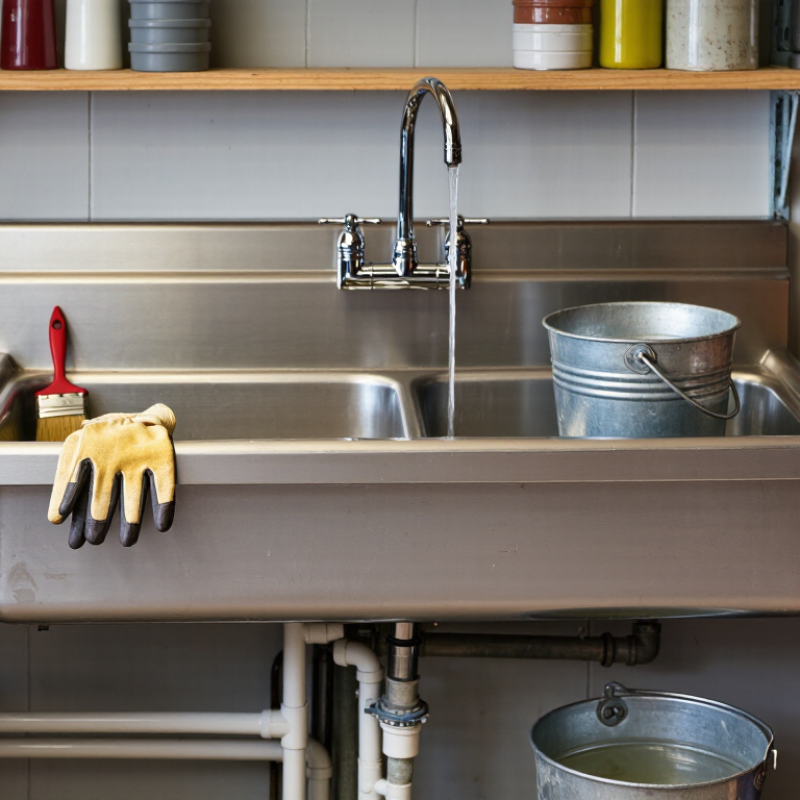
Stainless Steel Grades: ASTM A240 Lists 304 at 18–20% Chromium
Why Choose a Stainless Steel Garage Sink?
Stainless Steel Grades: ASTM A240 Lists 304 at 18–20% Chromium
For a garage sink, grade matters when wet tools, muddy parts, and household cleaners meet the basin. ASTM A240/A240M, Table 1, specifies 304 stainless steel with 18.0–20.0% chromium and 8.0–10.5% nickel. Chromium helps form a thin passive surface layer that limits corrosion. Nickel helps stabilize 304’s austenitic structure, supporting toughness and formability, as described in the Nickel Institute’s technical publication Stainless Steel: The Role of Nickel. That matters.
The chromium figure is useful, but it is not a promise that a sink cannot stain. Chloride salts from winter roads, for example, can encourage pitting if residue remains on a damp surface. Rinse the bowl after washing salty equipment, then wipe it dry. A quick pass with a cloth helps more than the grade number alone.
In practical terms, 304 is a sound choice for many indoor garage sinks because it balances corrosion resistance with durability. Still, examine the finished welds, corners, and drain area; grime tends to collect there. I would not judge a sink by alloy grade alone. Splash exposure, cleaning habits, and sheet thickness also affect service life. A small detail, perhaps—but worth checking.
Why Choose a Stainless Steel Garage Sink?
Chromium content ranges specified for selected stainless steel grades in ASTM A240
Type 304 is specified at 18–20% chromium. Chromium helps stainless steel resist corrosion by supporting formation of a protective surface layer. Grade selection should also account for the sink’s environment and other alloy elements.
304 vs. 316: ASTM A240 Lists 2–3% Molybdenum in Grade 316
Why Choose a Stainless Steel Garage Sink?
A garage sink often faces more than clean tap water. Wet tools, muddy boots, road salt, and strong cleaners can leave residue around the drain and faucet. Grade 304 stainless steel suits many everyday setups, but it contains little to no molybdenum. Grade 316 offers an extra alloying element: ASTM A240 lists 2–3% molybdenum in Grade 316. That addition improves resistance to pitting, especially where chloride salts may linger.
Small detail, big difference.
For a sink beside a driveway or in a damp workshop, 316 may be worth considering. It is not rustproof, though. Scratches, trapped grime, poor drainage, and harsh chemical exposure can still affect the surface. I would not treat the grade number as a guarantee; check the material specification and care instructions before buying. A quick rinse after salt or cleaner spills helps either grade.
Tips: Wipe the bowl dry after messy jobs, and clear debris from the drain edge. If you use de-icing salts nearby, rinse them away promptly. Even good stainless steel benefits from routine care.
Corrosion and Cleanability: What NSF/ANSI 51 Covers for Food-Equipment Materials
A stainless steel garage sink handles wet tools, muddy boots, and repeated rinsing without the chipped surface common to some finishes. Its smooth basin is relatively easy to wipe clean. Water spots still appear, though, and abrasive pads can leave visible scratches. A shiny finish can mislead.
NSF/ANSI 51 sets health and sanitation requirements for materials used in food equipment. It addresses whether materials are suitable for their intended contact and use, including resistance to corrosion and cleanability. These requirements matter when a sink is used for food preparation or washing food-contact items. They do not mean every stainless steel sink is automatically certified, or that the standard covers every installation detail.
Check the exact sink model and its documentation for relevant certification or material information. Also consider the cleaners you plan to use; harsh chemicals and standing salty water can damage some finishes.
“Stainless” is not a complete specification. The alloy, surface finish, weld quality, and sink design all affect everyday performance. Look closely at seams and corners, where dirt can collect. Even a compliant material cannot compensate for a poorly designed basin or careless cleaning.
Sink Construction: Compare Steel Thickness, Bowl Capacity, and Weld Quality
Steel thickness affects how a garage sink handles dropped tools and heavy buckets. In common U.S. gauge sizing, 16-gauge stainless steel is about 1.5 mm thick, while 18-gauge is about 1.2 mm. Check the stated thickness, not just the gauge: standards and listings can vary. A thicker bowl may resist dents, but poor support beneath it can still cause flex. Heavier is not automatically better.
Bowl capacity should match the work. A bowl measuring 18 by 16 by 10 inches holds about 12.5 U.S. gallons by simple geometric calculation; usable capacity is lower once you allow for the drain and splashing.
World Stainless’s Stainless Steel in Figures 2024 reports 58.4 million tonnes of global stainless-steel production in 2023, up from 55.3 million tonnes in 2022. Those figures show the material’s industrial scale, not a sink’s durability.
Look closely. Inspect welded corners and the drain opening for gaps, pinholes, rough grinding, or uneven seams. ASTM A240/A240M provides specifications for stainless-steel plate, sheet, and strip, but it does not certify a finished sink’s weld quality. Details matter.
Garage Installation: Match Drainage, Mounting, and Basin Size to Your Needs
Why Choose a Stainless Steel Garage Sink?
Garage Installation: Match Drainage, Mounting, and Basin Size to Your Needs
A stainless steel sink suits a garage because it handles muddy tools, paintbrushes, and routine rinsing without demanding delicate care. But installation matters just as much as material. Measure the available wall and floor space, then check where the existing drain and water lines sit. A deep basin can catch splashes, though it may feel awkward if the faucet is too low. Small details matter.
Plan drainage before choosing the sink. The 2024 International Plumbing Code lists a 1½-inch trap for a kitchen sink; a utility sink may be classified differently, so confirm local requirements with a qualified plumber. The U.S. EPA’s WaterSense program estimates household leaks waste nearly 10,000 gallons annually. That figure is a useful reminder to inspect joints after installation, not a reason to assume a new drain is leak-free.
Choose wall-mounted or freestanding installation based on the structure and the work you do. A wall-mounted basin leaves floor space clear, but needs secure backing. A freestanding unit is easier to position, though its legs can crowd stored items. I would not automatically choose the largest basin. A bulky tub can obstruct a garage walkway, and that trade-off is easy to miss on a showroom floor. Measure the largest item you expect to wash, then leave room to move around it.
Why Choose a Stainless Steel Garage Sink? - Garage Installation: Match Drainage, Mounting, and Basin Size to Your Needs
Use these common planning considerations to compare garage sink setups. Dimensions and installation details vary by product; confirm the sink’s specifications and local plumbing requirements before installation.
| Decision factor |
Common options or planning range |
How to choose for a garage |
Why stainless steel can help |
| Basin size |
Compact: about 15–20 in. wide; utility-size: about 22–25 in. wide. Depth commonly ranges from roughly 8–12 in. |
Measure the available wall or cabinet space and the largest items you expect to wash. Allow room for the faucet and nearby doors or drawers. |
A nonporous stainless surface is practical for rinsing tools, pots, and muddy items; wipe it dry to reduce water spotting. |
| Drainage and plumbing |
Most sinks use a basket strainer and a trapped drain connection. Drain position may be centered or offset, depending on the design. |
Check the existing drain location, pipe route, and trap clearance before choosing a basin. Match the drain opening and fittings to the sink and local code. |
Stainless basins are available with different drain layouts, making it easier to select a configuration that suits the plumbing route. |
| Mounting style |
Freestanding utility sink, wall-mounted sink, or drop-in sink installed in a compatible counter or cabinet. |
Choose a freestanding model for a simple utility setup, a wall mount where floor space matters, or a drop-in model when a suitable worktop is available. Confirm load support and fixing points. |
The material works with a range of sink styles. The mounting method—not the steel alone—determines the required support and installation details. |
| Steel thickness and construction |
Thickness and reinforcement vary by model. Compare the stated sheet thickness, rim construction, and support frame rather than assuming all stainless sinks are alike. |
For frequent use or heavier items, look for a stable frame and clear installation guidance. Check the product specifications for material grade and thickness. |
Stainless steel is corrosion-resistant, but performance depends on alloy, finish, care, and exposure. Avoid prolonged contact with harsh chemicals or standing salty water. |
| Faucet and splash control |
Faucet holes and backsplash details differ by sink. Some models require a separately mounted faucet. |
Verify hole count and spacing, faucet reach, supply-line access, and the height of any wall protection behind the sink. |
A smooth basin is easy to rinse, while a compatible faucet and backsplash help keep surrounding surfaces cleaner. |
| Care and everyday use |
Routine cleaning usually involves mild detergent, water, and a soft cloth; follow the manufacturer’s care instructions. |
Consider whether the sink will be used for handwashing, cleanup, gardening, or tool rinsing, and keep abrasive cleaners away from the finish. |
The durable, nonporous surface is suited to utility tasks and is straightforward to clean, though scratches and water marks can occur with use. |
Installation reminder: measure the sink area, confirm drain and faucet compatibility, and follow the sink manufacturer’s instructions and applicable plumbing codes.
Conclusion
A Stainless Steel Garage Sink can provide a practical, durable workspace for cleaning tools, equipment, and household items. When comparing options, consider the steel grade: ASTM A240 identifies Grade 304 as containing 18–20% chromium, while Grade 316 includes 2–3% molybdenum, which can offer added resistance to certain corrosive conditions. NSF/ANSI 51 addresses materials used in food equipment, making it a useful reference when evaluating cleanability and material suitability, though the right choice depends on how the sink will be used.
Construction and installation matter just as much as the grade. Compare steel thickness, basin capacity, and weld quality to find a sink that feels sturdy and suits your cleaning tasks. Before installation, check that the drain location, mounting style, and basin dimensions fit the available space and connect appropriately to your plumbing. Together, these considerations help you choose a sink that is functional, easy to maintain, and well matched to your garage.

 Jinrenkang Hardware